Green Gas isn’t just part of a cleaner future, it’s flowing today
First publised in Challenge Magazine's Autumn 2026 edition for Liberal Democrat Conference in Brighton, written by Vicky Grieve, East of England Network Director, Cadent.
My job is a practical one. I lead the team that keeps gas flowing safely to homes and businesses across the East of England, as part of the UK’s largest gas distribution network, which serves 11 million customers across the North West, West Midlands, East Midlands, North London and the East of England. So when the future of our network is debated as a distant, all-or-nothing choice, I want to offer an observation from the front line: the transition is already under way in our pipes.
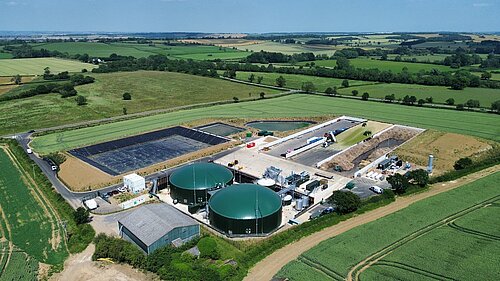
Today, almost 50 biomethane plants are connected to Cadent’s network alone, injecting around four terawatt hours of renewable gas a year, which is enough to meet the annual gas demand of roughly 350,000 homes. Since the first plant connected in 2013, more than 1.5 billion cubic metres of green gas has flowed through our pipes, avoiding some three million tonnes of CO₂. Nowhere is this more visible than here in the East, where farmers and food waste processors turn slurry, residues and leftovers into gas that heats the homes around them, no new boiler, no disruption, just cleaner gas.
No single technology will deliver net zero. A successful clean energy transition will be built on a mix of technologies. That is precisely why biomethane matters. It decarbonises the gas we will still need along the way, provides storable energy for the coldest days when the electricity system is under the most strain, and pairs naturally with hybrid heating systems.
It also matters, possibly more so, for industry. Alongside 11 million homes, our network supplies some 40,000 industrial businesses, including food producers and manufacturers that rely on processes requiring high-temperature heat that electricity cannot yet deliver affordably. For them, green gas is one of the few practical routes to cutting emissions this decade without pricing British industry out of world markets.
The sector is ready to scale. The first window of our new Ofgem-backed cost-sharing model drew 38 applications for new or expanded plants and we are working to grow from four terawatt hours to twenty by 2035. But we cannot do it alone. The Green Gas Taskforce has set out what government must provide: a long-term successor to the Green Gas Support Scheme, clear national targets, and robust certification so businesses can confidently buy verified green gas, as our European neighbours already do.
The alternative is drift, likely with natural gas continuing to burn in it for decades to come. In the long term, the real question isn’t what to do with the gas network. It’s how can we be putting as much green gas as possible through it.
Get this right and the prize is real. Taskforce analysis finds scaling biomethane could support 57,000 skilled jobs, add £70 billion to the economy by 2050, much of it in rural Britain, and cut the overall cost of net zero by more than £150 billion. Warm homes, competitive industry, thriving farms. The pipes are already there, but the choice is what flows through them.