Post-EU trade is far from certain
Dear Sir,
DPH
11 Aug 2018
Dear Sir,
Dear Sir,
We've hidden facebook.com/169753760561644/v... to prevent cookies being set that you haven't consented to. Please enable...

Parish-wide Issues

DB Cargo UK is the UK's biggest railfreight provider and has just gone through a programme of restructuring and modernisation in response to changing patterns of trade. They are using new systems and improved IT to streamline processes and deliver a more reliant and resilient transport service. A key element in all this is a £6 million expansion of its steel coil warehousing facility in Wolverhampton at Horseley Fields, including the addition of a new internal rail line. This will then bring the storage, handling and re-distribution capacity up to 40,000 tonnes of steel in the form of 3,325 coils.
DB Cargo UK is the UK's biggest railfreight provider and has just gone through a programme of restructuring and modernisation in response to changing patterns of trade. They are using new systems and improved IT to streamline processes and deliver a more reliant and resilient transport service. A key element in all this is a £6 million expansion of its steel coil warehousing facility in Wolverhampton at Horseley Fields, including the addition of a new internal rail line. This will then bring the storage, handling and re-distribution capacity up to 40,000 tonnes of steel in the form of 3,325 coils.
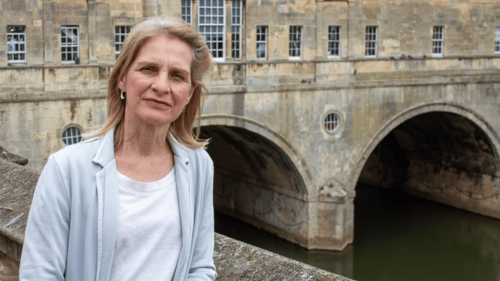
Wera Hobhouse, Liberal Democrat MP for Bath and spokesperson for Energy Security and Net Zero, called on the government to provide incentives for energy providers to develop solar power in the UK.
Mrs Hobhouse slammed the government for falling behind on meeting the UK’s renewable targets for solar energy capacity. The government plans to deploy 70 GW of solar power across the country by 2035. However, as of 2022, the UK had only installed 14.3 GW of solar pv.
Following a visit to a rooftop solar system installed by Bath & West Community Energy (BWCE) at Beechen Cliff School last year, Wera Hobhouse is keen to encourage the development of similar solar projects across Bath. The solar system is predicted to significantly cut the school’s fuel costs and reduce their carbon emissions by 52 tonnes a year.
In the House of Commons on the 27th February, the Bath MP noted that the UK is lagging behind the rest of the world in renewable energy investment, she urged the government to offer incentives to energy providers to improve solar capacity.
However, Andrew Bowie, Parliamentary Under Secretary for Energy Security and Net Zero, ignored Hobhouse’s proposals, failing to describe the ways in which the government could incentivise solar energy. Instead, Bowie said that the government’s Solar Taskforce would publish recommendations for solar power and reiterated the government’s target to deploy 70 GW by 2035.
Wera Hobhouse, Liberal Democrat MP for Bath and spokesperson for Energy Security and Net Zero, commented:
“The Conservatives are falling dangerously behind on meeting our targets for renewable energy production. It is no good the government setting an ambitious 70 GW solar target if they are nowhere near reaching it.
“It is clear that they have no plan to get us back on track to reach Net Zero. Evidently, they are more than happy to dismiss perfectly good proposals like incentivising solar power. That is why I am so proud that Bath is home to many community energy projects like the solar system at Beechen Cliff School, so that we can lead the way in renewables.”
“It is not just our climate targets harmed by the Conservatives’ delay. Families in Bath and across the country are struggling to pay soaring energy bills which investment in renewables could curb. That is why we Liberal Democrats would build significantly more renewable energy, aiming to generate 80% of our electricity from renewables by 2030.”
Peter Capener, Managing Director of Bath & West Community Energy said:
“Our work with schools is really demonstrating the value of community energy in both addressing the climate crisis and reducing fuel bills. Rooftop solar installed last year has already saved local schools a combined total of £134,209 and has reduced carbon emissions by 224.3 tonnes, which is equivalent to 12,173 journeys from Bath to Edinburgh by train!”